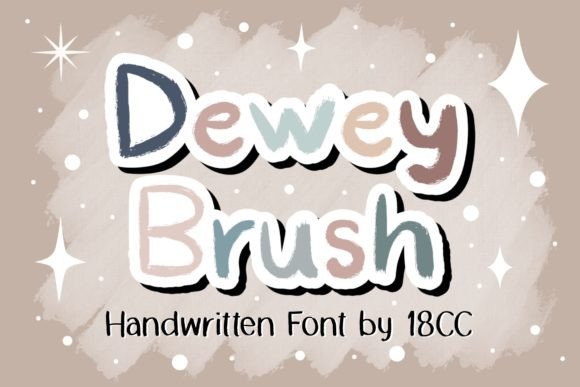
Dewey Brush: A Handwritten Font for Branding
Dewey Brush is a Script Handwritten typeface that brings immediate warmth and personality to any visual project. For small business owners, finding the right Fonts can be the difference between looking like a generic template and establishing a memorable brand identity. This charming style elevates design projects by adding a human touch that resonates with customers who value authenticity and craftsmanship.
Elevating Brand Identity with Dewey Brush Headings
When you integrate Dewey Brush into your core branding materials, you create an instant emotional connection with your audience. As a Script Handwritten font, it moves away from the cold, corporate feel of standard sans serif options. Many Fonts claim to be friendly, but few deliver the organic flow and balanced weight that this typeface offers. Using it for your main headings ensures that your message stands out without sacrificing elegance.
Consider a local boutique or a handmade jewelry shop. The logo needs to feel personal, as if the owner crafted each piece with care. Dewey Brush mimics the natural stroke of a brush pen, making it ideal for logo design where approachability is key. It works exceptionally well for businesses in the lifestyle, wellness, and creative sectors. By choosing a premium font like this, you signal to your customers that you pay attention to details. This consistency across your website banners, business cards, and storefront signage builds trust. Customers are more likely to engage with a brand that feels cohesive and professional, rather than one that uses mismatched or default typography.
Designing Wedding Invitations and Event Stationery
The wedding industry thrives on aesthetics, and Dewey Brush is perfectly suited for high-end event designs. As a versatile Script Handwritten option, it captures the romance and excitement of special occasions better than rigid digital fonts. When selecting Fonts for invitations, save-the-dates, or menu cards, readability and style must coexist. This typeface strikes that balance, offering legible letterforms that still feel spontaneous and artistic.
For entrepreneurs running a stationery shop or a wedding planning service, offering designs featuring Dewey Brush can set your portfolio apart. It pairs beautifully with delicate floral illustrations or minimalist geometric borders. Whether you are designing formal invitations or casual rehearsal dinner menus, the charm of this font adds a layer of sophistication. It allows you to create templates that clients perceive as high-value. Remember, in the event industry, the perceived value of the physical paper goods often reflects the perceived value of the event itself. Using a distinctive script font helps justify premium pricing for your design services or printed products.
Creating Eye-Catching Product Labels and Packaging
Packaging is the silent salesman of your product, and Dewey Brush can make your items pop on crowded shelves. In the realm of Script Handwritten typography, this font excels in short-form text such as product names, taglines, and signature elements. While many Fonts struggle at smaller sizes, this typeface maintains its character even when scaled down for labels on candles, cosmetics, or food items.
Imagine a small-batch coffee roaster or an artisanal soap maker. The label needs to convey quality and origin. Dewey Brush adds a handcrafted feel that mass-produced brands cannot replicate. It suggests that a real person was involved in the creation process. However, practical application is crucial. Use this font for the primary product name or a short descriptive phrase, but pair it with a clean sans serif font for ingredients and legal information. This combination ensures that your packaging is not only beautiful but also compliant and easy to read. Testing your design on actual printed materials is essential, as screen resolution differs significantly from print texture. A font that looks crisp on a monitor might lose detail on textured paper, so always request physical proofs before committing to a large print run.
Boosting Social Media Engagement with Signature Styles
In the fast-paced world of digital marketing, Dewey Brush helps your content stop the scroll. Social media platforms like Instagram and Pinterest are highly visual, and using a consistent Script Handwritten font creates a recognizable aesthetic for your feed. Unlike generic Fonts that everyone uses, this typeface gives your graphics a unique voice. It is particularly effective for quote graphics, promotional announcements, and story highlights.
For coaches, consultants, and service providers, adding a personal signature element to your posts can increase engagement. Dewey Brush works wonderfully for signing off on educational carousels or adding emphasis to key points in video thumbnails. It humanizes your digital presence, making your brand feel accessible and friendly. When creating social media templates, use this font sparingly as an accent. Overusing a script font can reduce readability on small mobile screens. Instead, let it highlight the most important words, such as "Sale," "New," or "Join Us." This strategic use draws the eye and guides the viewer through your content hierarchy. Consistency in your digital assets reinforces brand recall, ensuring that followers recognize your posts even before they see your handle.
Pairing Dewey Brush with Complementary Typefaces
To maximize the impact of Dewey Brush, you must understand how to pair it effectively with other Script Handwritten and structural Fonts. A standalone script can sometimes feel overwhelming, so balancing it with a neutral typeface is key to professional design. The goal is to create contrast without conflict.
A classic pairing involves combining Dewey Brush with a modern sans serif font. The clean lines of the sans serif provide a stable foundation, allowing the expressive curves of the script to shine. This combination works well for websites, where navigation needs to be clear, but headlines need to be engaging. Alternatively, pairing it with a traditional serif font can evoke a sense of heritage and luxury, suitable for high-end boutiques or law firms wanting a softer image. Always test your pairings in real-world scenarios. Check how they look together in a paragraph, a headline, and a button. Ensure there is enough visual distinction between the two fonts so they do not compete for attention. By mastering these pairings, you elevate your overall design capability, offering clients or customers a polished and cohesive visual experience that drives conversions and builds loyalty.